How Noise-Cancelling Headphones Make Silence by Adding Sound
Other title options
✓ How Noise-Cancelling Headphones Make Silence by Adding Sound 60 chars · score 12.25
Why Your Headphones Can Quiet an Engine but Not a Voice 55 chars · score 10.5
Noise-Cancelling Explained: The Upside-Down Sound at Your Ear 61 chars · score 11.0
Description · 826/5000 bytes
Flip the switch on a pair of noise-cancelling headphones and a plane's low roar seems to drain away. This explainer shows what is really going on: sound as a pressure wave, the upside-down copy of the noise that a headset plays into your ear, the 1930s patent and 1950s lab test behind the idea, and the physics that lets an engine hum fade while voices still get through.

Made for curious people with no physics background. No equations and no product recommendations, just clear pictures of how the trick works and where it stops working.

Chapters
0:00 Intro
0:32 Sound is a pressure wave
1:37 Sound that cancels sound
2:50 Proof from the lab
4:22 Where the trick runs out
5:34 The answer at your ear
6:25 Outro

This video uses an AI narration voice, AI-generated images, an AI-generated presenter and AI-generated music.
Tags · 301/500
how noise cancelling headphones work, active noise cancellation explained, noise cancelling, anti-noise, destructive interference, sound waves explained, how headphones work, why can I still hear voices with noise cancelling, physics of sound, science explained, active noise control history
Chapters
0:00 Intro
0:32 Sound is a pressure wave
1:37 Sound that cancels sound
2:50 Proof from the lab
4:22 Where the trick runs out
5:34 The answer at your ear
6:25 Outro
Made for kidsNoStart asPrivateAI useYes
(suggested — you decide)
YouTube Studio → Details → Attributes → AI use (API: status.containsSyntheticMedia)
Because:
7 photorealistic AI-generated images: YouTube asks you to disclose realistic scenes that did not happen (if every one is clearly generic, e.g. an abstract sky, you may judge otherwise)
AI-generated background music: YouTube lists AI-generated music among the examples to disclose
No disclosure needed for
script, title, description, tags and captions drafted with AI: production help, no disclosure needed
presenter 'leo' (illustration style): not photorealistic — animated or clearly unrealistic content needs no disclosure
narration by a text-to-speech voice (not a real person's voice or likeness); YouTube's page does not list this case, and the description line tells viewers
Line in the description: This video uses an AI narration voice, AI-generated images, an AI-generated presenter and AI-generated music.
Anti-noise only makes a small quiet zone, and a headset's tiny delays matter more as the pitch rises. Here is why an engine hum fades but voices get through.

Full video: “How Noise-Cancelling Headphones Make Silence by Adding Sound”

This video uses an AI narration voice, AI-generated images, an AI-generated presenter and AI-generated music.

#shorts #NoiseCancelling #SoundWavesExplained #PhysicsOfSound
Tags
why can I still hear voices with noise cancelling, how noise cancelling headphones work, noise cancelling, sound waves explained, physics of sound, active noise cancellation explained, anti-noise, how headphones work, active noise control history, destructive interference, science explained
Noise-cancelling was patented in the 1930s, tested in a lab in 1953 and flown around the world in 1986, long before it reached everyday headphones.

Full video: “How Noise-Cancelling Headphones Make Silence by Adding Sound”

This video uses an AI narration voice, AI-generated images, an AI-generated presenter and AI-generated music.

#shorts #NoiseCancelling #AntiNoise #SoundWavesExplained
Tags
how noise cancelling headphones work, noise cancelling, why can I still hear voices with noise cancelling, active noise cancellation explained, anti-noise, sound waves explained, how headphones work, physics of sound, active noise control history, destructive interference, science explained
Sound is a pressure wave. Play its mirror image at the same moment and the pushes and pulls cancel. That is the core of noise-cancelling.

Full video: “How Noise-Cancelling Headphones Make Silence by Adding Sound”

This video uses an AI narration voice, AI-generated images, an AI-generated presenter and AI-generated music.

#shorts #NoiseCancelling #DestructiveInterference #SoundWavesExplained
Tags
how noise cancelling headphones work, why can I still hear voices with noise cancelling, noise cancelling, destructive interference, sound waves explained, active noise cancellation explained, anti-noise, how headphones work, physics of sound, active noise control history, science explained
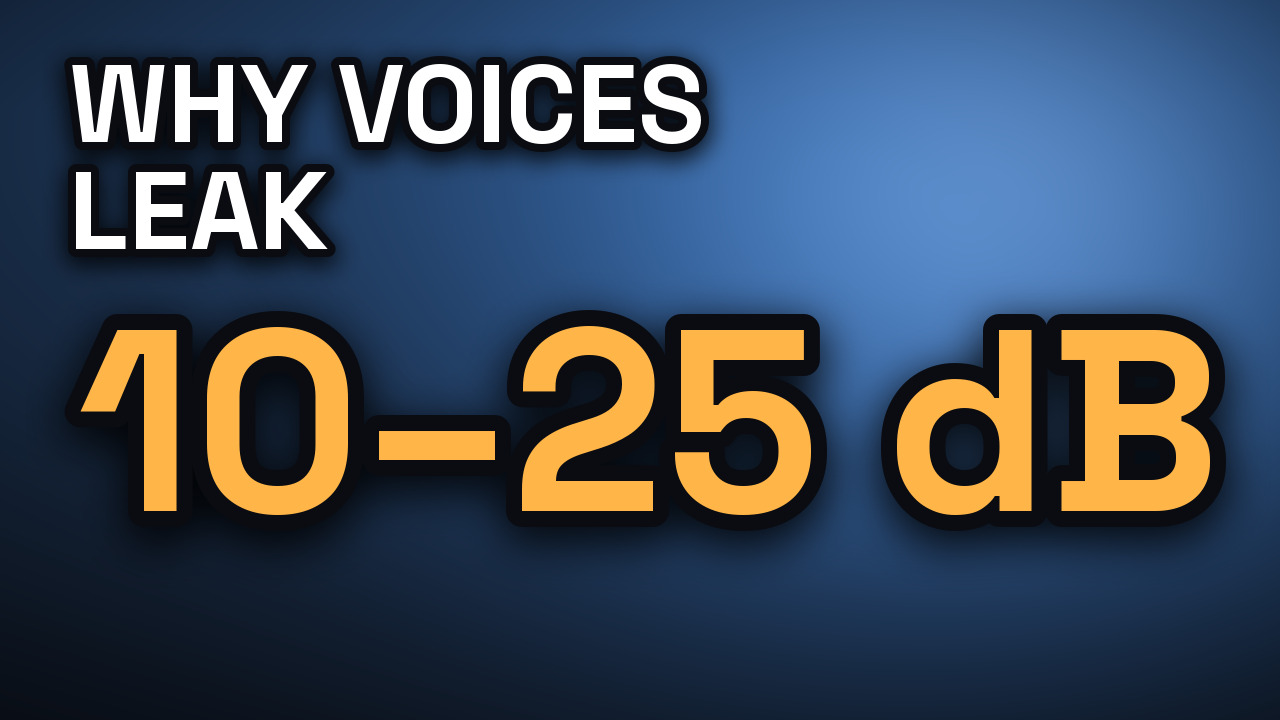
host · “Sound cancels sound”host leo (surprised)In use (thumb.png)photo · “Silence you add”b-roll s023data · “Why voices leak”figure 10–25 dB (stat)
How they look in the feed and in phone search
Music
EngineProduced music track (AI-generated)Moodtech
Listen to the bed (first 30 s):
AI-generated from a text prompt (no recording or sample was supplied); carries an invisible AI watermark
Quality check
free local checks · Loudness -14.6 LUFS · true peak -1.6 dB
no material issue (local checks only: no AI review ran)
at
severity
what
fix
long
minor
s008: the card is 44% built 1.5 s in — it opens on an empty panel
Fix: start the build earlier (the first element should land in about a second)
long
minor
s015: the card is 32% built 1.5 s in — it opens on an empty panel
Fix: start the build earlier (the first element should land in about a second)
long
minor
s019: the card is 40% built 1.5 s in — it opens on an empty panel
Fix: start the build earlier (the first element should land in about a second)
Captions
184 cues · tap a time to jump there
How can a pair of headphones make
a jet engine quieter by adding more sound?
Flip the switch on a noise-cancelling pair,
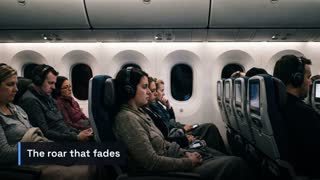
and the low roar of a plane cabin seems
to drain away.
Nothing extra
was blocked; something was added.
By the end, you'll know
what the tiny microphones
on each ear cup are listening
for, why a droning engine fades
while a voice across the aisle still gets
through, and why the whole idea
is almost a century old.
But first, what exactly
are the headphones fighting?
Sound is a wave of pressure.
A vibrating object squeezes
the air beside it, then lets it stretch,
and that pattern of squeezes
and stretches travels outward
until it pushes on your eardrum.
How fast those squeezes arrive sets
the pitch.
That rate is called frequency,
and it's measured in hertz,
the number of waves per second.
A deep engine hum repeats slowly.
The hiss of air
from a vent repeats thousands of times a second.
In air at 20 degrees Celsius, sound travels
at 343 metres per second.
So the lowest pitch most people
can hear, around 20 hertz,
has waves about 17 metres long.
The highest, around 20,000 hertz,
has waves just 1.7 centimetres long.
That size gap is the whole problem.
Foam and a snug seal soak up short,
high waves well.
But the waves of a low rumble
are huge next to any cushion, and stopping
them takes something heavy, like a thick wall.
So how do you stop
a wave you can't block?
You fight it with more sound.
If a second wave pushes exactly
when the noise pulls, and pulls exactly
when it pushes, the two cancel out.
Physicists call
that destructive interference,
and the second wave is often called anti-noise.
Here's one way a headset does it.
A microphone on the outside
of each ear cup hears the noise coming
in, and a chip flips that wave upside down.
The speaker plays the flipped wave along
with your music.
Many headsets also
have a second microphone inside the cup,
which listens to what's left
and fine-tunes the mix.
On a graph, the noise rises and falls,
and the anti-noise is its mirror image:
when the noise reaches a peak
of 1, the anti-noise sits at minus 1.
Add the two together,
and the sum stays flat at 0.
No change in pressure means no sound.
It's a bit like a tug of war
between two equal teams: everyone pulls hard,
and the rope doesn't move.
Here's where the comparison breaks.
Anti-noise doesn't quiet
the whole room, only a small zone around
the microphone, right at your ear.
It sounds almost too neat,
so has anyone actually measured it?
They have, and the idea is older
than you might think.
In 1933, a German inventor named Paul Lueg filed
a patent on exactly this: pick up a sound
with a microphone, flip it, and play
it back through a loudspeaker.
Twenty years later,
in 1953, two engineers, Harry Olson
and Everett May, built what they called
an electronic sound absorber:
a microphone,
an amplifier and a loudspeaker, wired
so the speaker cancels
what the microphone picks up.
They even imagined
it in an airplane or a car.
Near the microphone,
the sound dropped by 10 to 25 decibels,
but only for low sounds.
Decibels count in powers of ten:
every 10 decibels less means one tenth
of the sound intensity.
That's real, measurable quiet.
Then the idea went flying.
In December 1986, two pilots flew
a light plane called Voyager around
the world without stopping
or refuelling: nine days in a cramped cabin
with an engine at each end.
To protect their hearing,
they wore noise-cancelling headsets
that aviation histories describe
as early prototypes.
So the path runs from a patent filed
in 1933 and granted in the United States
in 1936, to a working lab device
in 1953, to headsets
on a record flight in 1986.
But if it works that well,
why can you still hear
the person sitting next to you?
The answer is timing.
Cancelling a wave means matching it push
for pull, and the shorter the wave,
the smaller the mistake it forgives.
A slow hum is easy to match.
A quick, high sound is not.
Researchers have put numbers on it.
Cancel a sound at one microphone,
and the zone that gets
at least 10 decibels quieter is only
about a tenth of a wavelength across.
For a 100 hertz hum, that's
about 34 centimetres.
For a 10,000 hertz hiss,
it's just 3.4 millimetres.
A headset adds a second limit.
Every tiny delay in its electronics
and speaker pushes the anti-noise out of step,
and the higher the pitch,
the further it falls behind,
until it would add
to the noise instead of cancelling it.
So headsets hold back on high sounds:
in a 1993 review, commercial ones cancelled
from about 30 up to about 500 hertz.
That's why a common belief is wrong.
Noise-cancelling doesn't block
every sound: it's best
at steady, low sounds, while voices
and sudden clatters carry much
of their sound higher up.
So what's really happening
at your ear when it all works?
So, how can adding sound make things quieter?
Your headphones listen to the world
through tiny microphones, build
an upside-down copy of the noise,
and play it into your ear
at the same moment,
over and over, as the noise changes.
At your eardrum,
every push from the noise meets a pull
from the speaker,
and the low roar flattens out.
The snug, padded seal does the rest,
soaking up much of the high hiss
the electronics leave alone.
Put together, that's a clear split.
Cancelled well: engine drone,
the rumble of a train,
the hum of an air conditioner.
Getting through: voices, clattering dishes,
a sudden bang.
Next time you flip
that switch, you're hearing two sounds
that add up to less than one.
Quiet isn't only something you block.
It's something you can add.
So noise-cancelling headphones
don't just shut the world out.
They answer it, wave
for wave, right at your ear.
If something here surprised
you, or you think I got
a detail wrong, tell me in the comments.
Script
Intro 2 segments
s001 · title · presenter
How can a pair of headphones make a jet engine quieter by adding more sound? Flip the switch on a noise-cancelling pair, and the low roar of a plane cabin seems to drain away. Nothing extra was blocked; something was added.
s002 · photo · full
By the end, you'll know what the tiny microphones on each ear cup are listening for, why a droning engine fades while a voice across the aisle still gets through, and why the whole idea is almost a century old. But first, what exactly are the headphones fighting?
Sound is a pressure wave 4 segments · claims to check
s003 · section · set
Sound is a wave of pressure. A vibrating object squeezes the air beside it, then lets it stretch, and that pattern of squeezes and stretches travels outward until it pushes on your eardrum.
s004 · clip · full
How fast those squeezes arrive sets the pitch. That rate is called frequency, and it's measured in hertz, the number of waves per second. A deep engine hum repeats slowly. The hiss of air from a vent repeats thousands of times a second.
s005 · tiles · full
In air at 20 degrees Celsius, sound travels at 343 metres per second. So the lowest pitch most people can hear, around 20 hertz, has waves about 17 metres long. The highest, around 20,000 hertz, has waves just 1.7 centimetres long.
Check: 343 m/s at 20 °C; audible 20–20,000 Hz; wavelengths 17 m and 1.7 cm — verified 2026-09-22 against OpenStax College Physics 2e, 17.2
s006 · bullets · presenter
That size gap is the whole problem. Foam and a snug seal soak up short, high waves well. But the waves of a low rumble are huge next to any cushion, and stopping them takes something heavy, like a thick wall. So how do you stop a wave you can't block?
Sound that cancels sound 4 segments
s007 · section · set
You fight it with more sound. If a second wave pushes exactly when the noise pulls, and pulls exactly when it pushes, the two cancel out. Physicists call that destructive interference, and the second wave is often called anti-noise.
s008 · steps · inset
Here's one way a headset does it. A microphone on the outside of each ear cup hears the noise coming in, and a chip flips that wave upside down. The speaker plays the flipped wave along with your music. Many headsets also have a second microphone inside the cup, which listens to what's left and fine-tunes the mix.
s009 · line_chart · full
On a graph, the noise rises and falls, and the anti-noise is its mirror image: when the noise reaches a peak of 1, the anti-noise sits at minus 1. Add the two together, and the sum stays flat at 0. No change in pressure means no sound.
s010 · photo · full
It's a bit like a tug of war between two equal teams: everyone pulls hard, and the rope doesn't move. Here's where the comparison breaks. Anti-noise doesn't quiet the whole room, only a small zone around the microphone, right at your ear. It sounds almost too neat, so has anyone actually measured it?
Proof from the lab 5 segments · claims to check
s011 · section · set
They have, and the idea is older than you might think. In 1933, a German inventor named Paul Lueg filed a patent on exactly this: pick up a sound with a microphone, flip it, and play it back through a loudspeaker.
Check: Paul Lueg filed in Germany in 1933 (27 Jan); U.S. patent 2,043,416 granted 1936 — verified 2026-09-22 against the patent (Google Patents US2043416A)
s012 · photo · inset
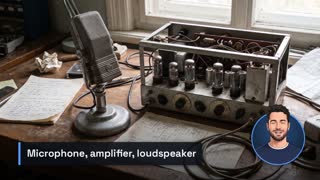
Twenty years later, in 1953, two engineers, Harry Olson and Everett May, built what they called an electronic sound absorber: a microphone, an amplifier and a loudspeaker, wired so the speaker cancels what the microphone picks up. They even imagined it in an airplane or a car.
Check: Olson and May imagined it in 'an airplane or automobile' — verified 2026-09-22 against Elliott & Nelson, IEEE SPM 1993
s013 · stat · presenter
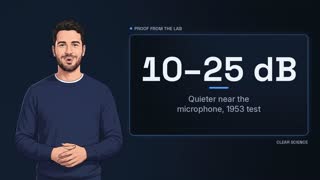
Near the microphone, the sound dropped by 10 to 25 decibels, but only for low sounds. Decibels count in powers of ten: every 10 decibels less means one tenth of the sound intensity. That's real, measurable quiet.
Check: Olson and May 1953: 10 to 25 dB less near the microphone, low frequencies only — verified 2026-09-22 against JASA 25, 1130 (1953), abstract
s014 · photo · full
Then the idea went flying. In December 1986, two pilots flew a light plane called Voyager around the world without stopping or refuelling: nine days in a cramped cabin with an engine at each end. To protect their hearing, they wore noise-cancelling headsets that aviation histories describe as early prototypes.
Check: Voyager, December 1986, nonstop and unrefuelled, about nine days; the pilots wore noise-cancelling headsets that aviation histories call early prototypes — verified 2026-09-22 against Smithsonian NASM (flight); UPI 1986-12-16 (headsets worn around the clock); Aviation History 2019 ('active-noise-suppression headsets'); Kitplanes (prototypes) — the narration attributes the last
s015 · timeline · full
So the path runs from a patent filed in 1933 and granted in the United States in 1936, to a working lab device in 1953, to headsets on a record flight in 1986. But if it works that well, why can you still hear the person sitting next to you?
Where the trick runs out 4 segments · claims to check
s016 · section · set
The answer is timing. Cancelling a wave means matching it push for pull, and the shorter the wave, the smaller the mistake it forgives. A slow hum is easy to match. A quick, high sound is not.
s017 · compare · full
Researchers have put numbers on it. Cancel a sound at one microphone, and the zone that gets at least 10 decibels quieter is only about a tenth of a wavelength across. For a 100 hertz hum, that's about 34 centimetres. For a 10,000 hertz hiss, it's just 3.4 millimetres.
Check: quiet zone ≥ 10 dB about a tenth of a wavelength across: 0.34 m at 100 Hz, 3.4 mm at 10 kHz — verified 2026-09-22 against Elliott & Nelson, IEEE SPM 1993, p. 15
s018 · stat · presenter
A headset adds a second limit. Every tiny delay in its electronics and speaker pushes the anti-noise out of step, and the higher the pitch, the further it falls behind, until it would add to the noise instead of cancelling it. So headsets hold back on high sounds: in a 1993 review, commercial ones cancelled from about 30 up to about 500 hertz.
Check: 1993: commercial headsets cancelled about 30 Hz to 500 Hz; the high limit is phase shift building up in the loop — verified 2026-09-22 against Elliott & Nelson, IEEE SPM 1993, pp. 21 and 28
s019 · myth_fact · inset
That's why a common belief is wrong. Noise-cancelling doesn't block every sound: it's best at steady, low sounds, while voices and sudden clatters carry much of their sound higher up. So what's really happening at your ear when it all works?
The answer at your ear 4 segments
s020 · section · set
So, how can adding sound make things quieter? Your headphones listen to the world through tiny microphones, build an upside-down copy of the noise, and play it into your ear at the same moment, over and over, as the noise changes.
s021 · photo · full
At your eardrum, every push from the noise meets a pull from the speaker, and the low roar flattens out. The snug, padded seal does the rest, soaking up much of the high hiss the electronics leave alone.
s022 · pros_cons · presenter
Put together, that's a clear split. Cancelled well: engine drone, the rumble of a train, the hum of an air conditioner. Getting through: voices, clattering dishes, a sudden bang.
s023 · photo · inset
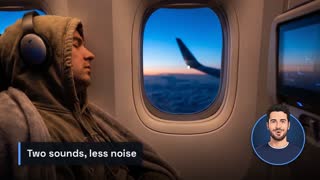
Next time you flip that switch, you're hearing two sounds that add up to less than one. Quiet isn't only something you block. It's something you can add.
Outro 1 segments
s024 · outro · set
So noise-cancelling headphones don't just shut the world out. They answer it, wave for wave, right at your ear. If something here surprised you, or you think I got a detail wrong, tell me in the comments.
Decision history
when
item
decision
by
render
note
short_1
approved
Demo@dashboard
846dcbb80373
long
approved
Demo@dashboard
af86d13f9935
Clear and well paced. The line-chart moment where the two waves cancel is the best bit.
Pipeline log
last 40 lines
03:28:28 render: s005 done (5/24)
03:28:50 render: s006 done (6/24)
03:29:06 render: s007 done (7/24)
03:29:25 render: s008 done (8/24)
03:29:36 render: s009 done (9/24)
03:30:06 render: s010 done (10/24)
03:30:24 render: s011 done (11/24)
03:30:58 render: s012 done (12/24)
03:31:16 render: s013 done (13/24)
03:31:52 render: s014 done (14/24)
03:32:04 render: s015 done (15/24)
03:32:18 render: s016 done (16/24)
03:32:35 render: s017 done (17/24)
03:33:00 render: s018 done (18/24)
03:33:15 render: s019 done (19/24)
03:33:30 render: s020 done (20/24)
03:33:54 render: s021 done (21/24)
03:34:13 render: s022 done (22/24)
03:34:32 render: s023 done (23/24)
03:34:46 render: s024 done (24/24)
03:34:46 render done in 480s
03:34:46 assemble …
03:35:33 assemble done in 47s
03:35:33 captions: up to date
03:35:33 shorts_media: up to date
03:35:33 shorts …
03:35:33 shorts: 3 of 3 Shorts to render, 3 to mix
03:36:57 render: short_1 done (1/3)
03:38:18 render: short_2 done (2/3)
03:39:23 render: short_3 done (3/3)
03:39:40 shorts done in 247s
03:39:40 meta …
03:39:43 thumbs: host “Sound cancels sound” (172 KB), photo “Silence you add” (214 KB), data “Why voices leak” (118 KB) — thumb.png = host; see thumbs/preview.jpg
03:39:43 meta: AI use at upload — suggested answer Yes (7 photorealistic AI-generated images; AI-generated background music)
03:39:43 meta done in 2s
03:39:43 qa …
03:41:46 qa: local checks only (free local checks) · 0 material, 3 minor · verdict pass: no material issue (local checks only: no AI review ran)
03:41:46 qa done in 123s
03:41:46 review …
03:41:46 review done in 0s
Edited the script with Claude? This re-renders just the parts that changed.